HI, and welcome to my blog! I am a field guide in a private game reserve in South Africa and below you will find stories and pictures of my amazing job!

August 8, 2011

Eternal Enemies

       
          The beauty of a non fenced reserve is the element of surprise.  At any moment, any animals can turn up, and therein lies the fascination and intrigue of this job.  The other day, we discovered an adult male lion and 2 younger males on a fresh buffalo kill.  For the next 3 days we watched these huge cats gorge themselves to bursting point.  A male can put away 30-40kgs in a sitting and their comical appearance resembling that of having swallowed a pair of beach balls gave us plenty of amusement.


Male lion repels another hyena raid on his hard earned buffalo kill

          The presence of a large kill brought with it the inevitable hyena party.  At its peak, numbers reached about 30, yet none of them were bold enough, or stupid enough to try and steal a morsel from the ferocious diners.  Each time they plucked up the courage to form a raiding party, they were sent scurrying by the biggest of the males.  Ultimately, the coalition finished off every palatable item and the hyenas were left looking forlorn and miserable as they scrabbled over the scarce remains with the vultures.

3 hyenas keep their distance from th buffalo carcass

          Some lucky guests at Selati witnessed the wrath of the hyena gang late one night when they had an all out war with our group of females and cubs.  By all accounts, about 35 hyenas took on the lionesses, and this time they came out on top, stealing a fresh zebra kill from the females, sending them scattering all directions.  With this harassment and the presence of males that posed a threat to the cubs, the lionesses have once again retreated to the safety of the southern section of the reserve.  Sightings of them have continued to be good and all 10 cubs still continue to defy all the odds.

Blood drips from the mouth of one of the lionesses on a fresh zebra kill

The lionesses scan the horizon for their next meal

The next generation being led to less dangerous ground

3 of the lionesses keep a close eye on proceedings as they move to a new hunting ground

           It is hard not to get too attached to the animals when you spend hours every day watching them go about their daily lives.  We are privileged to watch the younger members of the community grow up in their natural habitat and we share their trails and tribulations during their battle for survival.  There is no more poignant case at the moment than that of our young male leopard.  After his torrid beginning of just escaping the same fate that befell his brother (death at the jaws of the Xihangalas, the dominant male) he has matured into a handsome young specimen.  In the last 2 weeks he has come of age and we have seen him kill his first impala with his bare claws.  The most traumatic period of his life is behind him with the arrival of adulthood but with his impending abandonment by his mother, his next test has just begun. The life of a leopard is hard and lonely and we all have or fingers crossed that his hunting skills have been sufficiently honed to see him through.

Xihangalas monitoring his territory from the vantage point of one of the many termite mounds

          In other news on the reserve, the wild dogs have since move on with their cubs and have not been seen in the last few weeks.  The den site stands empty but we still live in hope that they will return in time.  As usual, the beauty of the open system has compensated for their loss and we have had regular sightings of a huge buffalo herd with numbers estimated in the 700s cutting a swathe through the bush.  We are all waiting for the lions to discover this feast but thus far they have been left to their own devices.  It’s still very impressive to be sat in a sea of buffalo as they cruise past the car; it feels like you have been accepted into the herd. 

Buffalo bull gives the 'bank manager' stare


One of the last looks at the wild dogs before their departure

Enthousiastic young rhino gallops through the grass

          There have been some interesting happenings on the feathered front also, with confirmed sightings of woodlands kingfisher, wood sandpiper and red breasted swallows in the last week.  All 3 are migrants and not expected to return until October.  Perhaps the climate changes are finally manifesting in their behavior or maybe they just set their watch wrong this year?!  Only time will tell…

Close up of the fork tailed drongo as he follws the land rover looking for insects flushed from the grass by the tires 

Co operative breeding group of the beautiful magpie shrikes


July 19, 2011

Leaps of Leopards

As most of you know by now, Sabi Sabi is renound for its leopard sightings.  Having just returned from a month off getting married and enjoying a honeymoon in Bali, I was eager to watch these gorgeous animals prowling around their domain once more.  What has transpired since my return has been more than I could have ever expected.  The main players once again have been these sleek enigmas of the African night. 
Last week we found the female known as Nottens and her now 18 month old cub, Selati, in a jackelberry tree with an impala kill.  We were lucky enough to get a good view of the male gorging himself on the remains of the carcass.  His experience is growing by the day and is starting to become more and more independent.  He is still being provided for by his mother but has recently been seen taking out a scrub hare on his own so he is maturing nicely.  We try not to get too attached to these animals but watching them learn these life lessons, it is hard not to!

The Selati male keeps a keen eye out as he enjoys his impala breakfast

The Selati male reaping the rewards of his mother's hunt

                Later that night, the dominant male of the area, Xihangalas, no doubt attracted by the smell of fresh blood on the air, arrived at the kill sight and muscled his way into action, chasing the 2 smaller leopards away.  Both showed incredible boldness or perhaps stupidity and stayed close to the kill in case his majesty let any tit bits slip from his grasp.  Let’s not forget that this same male was responsible for killing Nottens’ other cub last year and will have no issues in chalking up another victim should the Selati male stray too close. 
Xihangalas' barbed penis, used to stimulate ovulation, causes the female to lash out as he bids a hasty retreat from her wrath

                The next morning we found Xihangalas and another female next to the water close by engaged in mating activities and to our surprise, Nottens watching close by.  She was not trying to get involved but I presume merely watching the events unfold and keeping an eye on Xihangalas and his intentions towards her cub.  To see 3 leopards together twice in 2 days is special enough but when Selati wandered into the mix to make it 4, we knew we were witnessing something special.  Xihangalas chased Selati up a tree with Nottens trying to run interference.  Thankfully he seemed more preoccupied with his nuptials with the other female that he failed to hammer home his size and weight advantage.  What a way to start the cycle though!

                As if that wasn’t enough, a few days later, we found the Lisbon female with a waterbuck kill in the south.  No sooner had she choked out her victim, a hyena ambled into the equation and casually stole her spoils.  Disconsolate, she settled in a tamboti thicket to watch her prize being consumed.  Shortly after, she was joined by a male and young female!  The new female hasn’t been seen before and she was intent on mating with the male, presenting herself to him at every given opportunity but he was having none of it.  Perhaps she was too young still and her promiscuous demeanor was her way of saving herself a hiding from the male.  Again, a spectacular sighting!

The un-named male from the south shows his contempt towards a young female's advances
                The lion cubs continue to be a great source of amusement most days; their playful behavior so important in developing the skills necessary for life as an adult.  Against all odds, the 10 cubs seem to be doing well, even with the absence of a dominant male to protect them from rogue male lions.  Time will tell if they can continue to cheat fate but their chances of reaching maturity still look grim.  The females within the southern pride have proved themselves before though, with 8 cubs from their last litter now successfully independent!

Two of the cubs locked in an embrace as play continues to dominate their days


One of the cubs delivers a flying headbutt to his sibling during another bout of play

One of the females from the southern pride flaunting her fearsome assets!


The cubs are beginning to develop their tree climbling skills

Lovely silhouette shot of the cubs bathed in the spotlight from another game viewer

 
                This entry would not be complete without a mention of the wild dogs, who are, for the time being anyway, denning close to Earth Lodge with 6 pups.  We had not seen them for 3 or 4 months until last week but we are now enjoying daily sightings of Southern Africa’s most endangered and efficient predators.  The other day, they took out a sub adult male nyala on the lawn of room 7 at earth lodge and we all had front row seats to the carnage that ensued.  Within the hours, nothing was left of the poor nyala except skin and bones.  The animals in that section cannot rest easy though as wild dogs’ exceptionally high metabolism means that 2 or 3 kills a day are not uncommon!

One of the wild dogs caked in blood after eating a nyala in front of Earth Lodge
                Other highlights to mention are a brand new rhino calf that I found a few days ago.  Three days prior to the sighting we had discovered the placenta from a recently born rhino in a drainage line, its presence given away by nature’s clean up crew – hooded vultures, bataleur and tawny eagles congregating in the trees above.  I have never seen such a small rhino – a 3 day old looks like a medium sized wart hog and we watched entranced as it suckled from the mother, sometimes confusing the location of the teats and scratching around in her armpit instead!  With dinner plate sized feet, his constant unsteadiness and stumbling antics had us engrossed for quite some time before they moved into thick bush.  An incredibly rare sighting of caracal also deserves a mention.

A lilac breasted roller coming into land after an aerial hunting sallie

A rare picture of the nocturnal white tailed mongoose

June 2, 2011

Hell Hath No Fury Like a Rhino Scorned


Another week in the bush has flown by.  Winter is most definitely here now and those of you that have never been to South Africa will not comprehend that it is possible to be so cold in the sub tropics!  Mornings now are between 1 and 3 degrees on average and guests are very grateful for the inclusion of blankets and hot water bottles in the land rovers.  The wind chill is biting when there is no roof or windows and chapped lips, streaming eyes and frozen ears are becoming par for the course!  The bush is also drying out now as we expect no more rain before October.  The vibrant greens and colours of summer are long behind us now and have been replaced by shades of yellow, orange and brown as the bush begins its annual torpor.  This is fire season and smoke has been spotted in neighbouring reserves often over the last few days.  Thankfully we have avoided any thus far but we are under no illusions that the fire fighting team of us, the lodge personnel, will be called into action soon.
                The sightings are also picking up as the trees are losing their leaves and the visibility improves.  The lion cubs have been seen regularly and all 10 balls of playful fluff are entertaining us on an almost daily basis.  The mothers hunting has also improved as they camp out by the river waiting for the unwitting animals to approach the river for water during this dry time.  In the past few days they have killed 2 buffalo and all are looking in great shape.  Winter is a great time for predators as the lack of food and scarcity of water mean that the herbivores are loosing condition and taking more chances to find nature’s elixir, water.


1 of the young lion cubs swots his sibling bathed in morning sunlight

                     We also had a great sighting of the original dominant male leopard of the area, known as Sand River, one night.  He has been patrolling his old stomping ground looking for the female that hangs out around Little Bush Camp.  It seems as if she has lost her cub and is now back in estrus and the males of the area are trying to pinpoint her location to mate with her once again.  Sand River still looks as if he is blind in one eye but is still in great shape and oozed confidence as he walked past our land rover.

An intimidating walk past from the big guy

Sand River searching out the Little Bush female

Sand River's opaque right eyes seems not to be hampering his hunting ability

                A large herd of elephants was also seen in front of Selati camp the other day and we watched them at sunset as they strode over to the water to drink.  During the winter, these giants need about 120 litres of water a day and will be a regular sighting around the pans on the reserve.  We were looking into the sunset so photos were difficult and the only way to get an acceptable image was to give it a sepia finish.

Some of the large herd of elephant drinking in front of Selati 

                     In other news, a new male leopard has been spotted on our reserve and we watch with anticipation what his arrival will do to upset the already rather unstable apple cart.  One of our guides, Jonas, also witnessed 2 lesser bush babies mating one evening and there have been a few porcupine sightings of late.  It is rare to see these secretive nocturnal pin cushions but there have been about 4 or 5 sightings in the last week!  Not to mention a plethora of beautiful sunrises and sunsets!!

Sunrise in the lowveld - what more is there to say?


The undoubted biggest story of the last week came about when I was doing a mentored training walk.  The premise is simple – purposely walk into, view and extract from a sighting involving one of the big 5.  These approaches are an essential part of the on going training of the guides at Sabi Sabi as walking safaris are offered on a daily basis and the more experience we can gather, the better prepared we are to deal with a potentially dangerous situation.  I was leading the walk with Alistair as my back up as we headed out into the bush for a few hours.  Soon after leaving the lodge, we heard the trumpeting of elephants north of us so made a cautious approach to their approximate location.
                All went well and I spotted one of the females through a thicket of bushes about 50m from the road.  The wind direction was swirling and thus it was very difficult to decide on a safe approach.  While we were debating our next move, the herd suddenly changed direction and started making directly towards us on the road.  Swiftly we decided to head north of them and try to get to an open area where at least our surroundings could be monitored more safely.  Once there we were rewarded with a far safer view point to watch the herd as they milled about feeding.  We also spotted 2 rhino in the distance so decided to cross the drainage line to get another approach in the bag.  I left Alistair to look after the others while I went into the river bed to ensure that there were no surprises waiting for us inside.  After 5 minutes or so I returned to find the rest of the group hiding behind the bushes.  It seemed that in my absence, a mother and calf had ventured back and crossed the road about 30m from where I left them!
                In light of the still confusing wind and the erratic nature of the elephants’ movements we decided that discretion was the better part of valour and quickly made our way through the drainage line to the rhinos.  We were able to do a good approach on the 2 females and watched them from about 40m before deciding it was time to head back as the sun was now low in the sky.  As we extracted back towards the road the females broke into a run.  Fearing that they had been alerted to our presence, we took refuge behind a bush and waited to see what had spooked them.  Our initial thoughts that we were the cause of their flight were dashed when a huge male rhino strode into view.  We all recognized him instantly as he has only half a left ear and our adrenaline levels rose as one.  We know him well on Sabi Sabi – on his own, he is generally very placid and easily approachable but when females are placed in the mix, he becomes very aggressive and protective of his ladies.
                To make maters worse, the wind changed and so did his body language.  He checked his advance on the females and sniffed the air.  The sun was setting directly behind him and we were given a beautiful view of him on the crest of the open area but then the sun was soon blotted out by his massive figure as he made a beeline to where we were hiding. How dare some human intruders get in the way of his courtship?!  All of a sudden, the situation had become more serious.  Our escape route had been cut off, the light was fading and we now had a male rhino hot on our heels!  Having very little option left, we agreed to move fast.  Alistair was to lead the others back to the drainage line and I would bring up the rear as a last line of defense in case the rhino decided to charge.  We kept low as we half jogged across the 50m of open ground to the shelter of the riverbed with the rhino still quickly closing ground.  This was straight back towards the elephant herd, and we were all praying that we wouldn’t find them waiting for us.  Alistair slipped down the bank first, swiftly followed by the others and as I came down last, the rhino was now 20m and closing.  Thankfully, the riverbed was empty and we bid a very hasty exit away from the area, checking behind us every few steps to ensure our jealous bull didn’t decide to follow us down.  Thankfully he chose to remain on the bank, seemingly happy that he had scared off any competition.  Because of the failing light, we frog marched back to the lodge, arriving well after sunset, thankfully not encountering anything else on the way!  It was a scary situation but a good lesson that things can change at any time and to expect the unexpected!

May 24, 2011

The Sabi Sabi Soap Opera Continues

                Nothing feels like coming back to the bush after a couple of weeks off.  The first game drive is always filled with a mixture of excitement and anticipation.  I am in the enviable position of watching a lot of these animals go about their daily lives and time off is like missing your favourite soap opera for 2 weeks – you wonder how the main players are fairing in the never ending game of life.  The start of this cycle has been no different.  With some trepidation I jumped on to my land rover in the company of MJ and Marge from the USA and Rodney and Jenny from SA.  Both groups were regular safari goers and shared my excitement as we ventured out into the bush to catch up on the storyline.  A huge thank you to all 4 of them for being so enthusiastic, great company and for making my job easy!
                Some things never change – rhinos (white ones at least) are so numerous in our little corner of paradise that it is not unusual to see in excess of 10 of these endangered prehistoric remnants.  Many rhino sightings greeted us, including a plethora of calves, always entertaining in their shenanigans!  Our rather over populated male contingent is still actively searching for mates and I was lucky enough to capture this one after a mud bath, including a fork tailed drongo flying alongside him ready to snap up any insects flushed from his path.

Male rhino shining after his mud bath along with his fork tailed drongo companion


                Elephants have long since been my favourite animal to watch in the bush.  Their expressions are so emotive that it is easy to understand why they have been classified as more intelligent than dolphins.  At present we are being graced with multiple herds meandering through Sabi Sabi’s reserve and 3 or 4 sightings in a drive is not unusual.  One such herd was busy feeding close to the road when a curious youngster boldly walked over to a few metres from the car to investigate us.  His periscopic trunk actively searched the air for more clues as to our intentions but he soon settled down to feed on the round leaf teak next to us.

Young male elephant sniffs us intently, safe is the knowledge that back up is waiting behind him should he bite off more than he can chew!


                The main characters in our 24 hour soapy are always the cats.  Our female and cub (although at 16 months he is almost as big as his mother) look like they have permanently returned to Sabi Sabi and we have had many sightings of them the past few days.  We were lucky enough to see them on a grey duiker kill one night.  Although the visual was poor, the adventure in trying to weave through the thicket of protected tamboti trees made the whole scene worthwhile.  The following night we picked them up leaving the now finished kill and I got a chance to put our new lens to the test with some spotlight photography.  Somehow they are always much more impressive to me bathed in the spotlight like a movie star.  It allows the eye to concentrate solely on them and really appreciate the natural beauty and grace that they ooze from every rosette! 

Young Nottens (as she is known) sets out on another hunt

Young Nottens (foreground) and her 16m old cub share the spotlight as they leave the site of their last kill 

A face in the darkness....

The cub (Selati Male) watches his mothe leave as he is once again left to his own devices before the next meal is served
                The highlight of tour encounters of them was undoubtedly the events that unfolded on our last morning.  We managed to locate the young male sleeping on top of a termite mound enjoying the first warm rays of the sun.  Soon after we arrived, a rhino and her 3 month old calf entered the stage.  At 16 months, he is still being provided for by his mother but it is imperative that he develops the skills necessary for him to fend for himself.  This is achieved in one way: practice, practice, practice!  A 150kg rhino baby may seem a little excessive to some but not to our budding young hunter!  We watched mesmorised as he slinked off the termite mound, hugging the grass, stalking closer and closer to his thick skinned adversary.  At about 5 metres he lay flat in the grass to wait for the perfect moment to strike.  The calf must have smelt him and tentatively moved forward to investigate.  At a distance of only a few centimeters, the leopard leapt up from his hiding place, swatted the calf across the nose and disappeared in a flash of gold and black.  The calf shrieked in panic and the mother rushed to his rescue, but the tiny tormentor had long since sought cover and watched as the mother huffed and puffed trying to find the source of her calf’s cries.  After a lot of posturing, they both bade a hasty exit, thankfully not taking out their frustrations on us as they crashed past us a few metres away!  The leopard, unperturbed by the mammoth task ahead of him, merely watched from the safety of the bushes before continuing his challenge.  It all happened too fast to get off any shots but I know Marge got some great video footage that I hope will be able to make a guest appearance in a future entry!  The young leopard clearly has some skills already but must work on his prey choice in the future…
                We also had multiple lion sightings and I am happy to report that all 10 cubs are alive and well (albeit somewhat illusive to find at times!)  The best sighting came about one morning as we left the lodge.  Phios, my tracker, adeptly spotted some fresh tracks on the road and we set about tracking their progress.  After establishing that no spoor lead away from the block they entered, we ventured in on foot and promptly found a mature male, a juvenile male and young female lying in the grass.  Thankfully the vegetation was on our side for once and we spotted them from a good distance away and thus avoided any early morning pant changing!  We stayed with them until the sun rose sufficiently to illuminate their muscular bodies and were rewarded with some perfect light.

Young female lioness from the Ifield pride stretches her legs in the morning sun under the watchful gaze of the dominant male

Perfect light allowed me to pick up the life in those eyes!

                The same group was spotted that evening and I was again able to get some great shots with the aid of the spot light as they started moving out on another evening’s hunt. 

The dominant male from the Ifield pride following the rest of the pride as they set out on another hunting expedition

The young Ifield male focused on the evening's tasks ahead
                Other highlights of the return to work included a rare sighting of both porcupine and civet.  Oh, and I forgot to mention that winter is most definitely here!!!!  Morning drives are accompanied by 3 layers of clothing, wooly hats, gloves, hot water bottles and blankets.  Not to mention weeping eyes and seeing your breath in front of your face!  It’s seriously cold but such a beautiful time – the cool, crisp air seems to really bring the mornings to life.  However, once the sun comes up it’s a different story and I managed to get sun burned one morning….will my English skin ever learn!?!  All in all, it’s GREAT to be back but let’s not forget the biggest news – I get married in 25 days to the love of my life!  What did I do to deserve such an amazing life?!?

May 8, 2011

The Boys are Back in Town

        The last week or so have been action packed with regards to the ever changing lion dynamics on Sabi Sabi.  The catalyst?  The return of a large herd of buffalo…aka the buffet!  Their arrival brought with them the five young males of our pride, following this mobile food source back to their birth place.  Since they were chased out by the new dominant male about 4 months ago, they have only been seen once or twice.  We were all very excited to see them on a buffalo kill close to Selati Lodge the other day.  It is very satisfying to know that the lions that we watched grow up are still doing well and surviving on their own.  They are still maturing but are well on their way to being a formidable coalition.  Whether they will remain once the buffalo herd moves on remains to be seen.

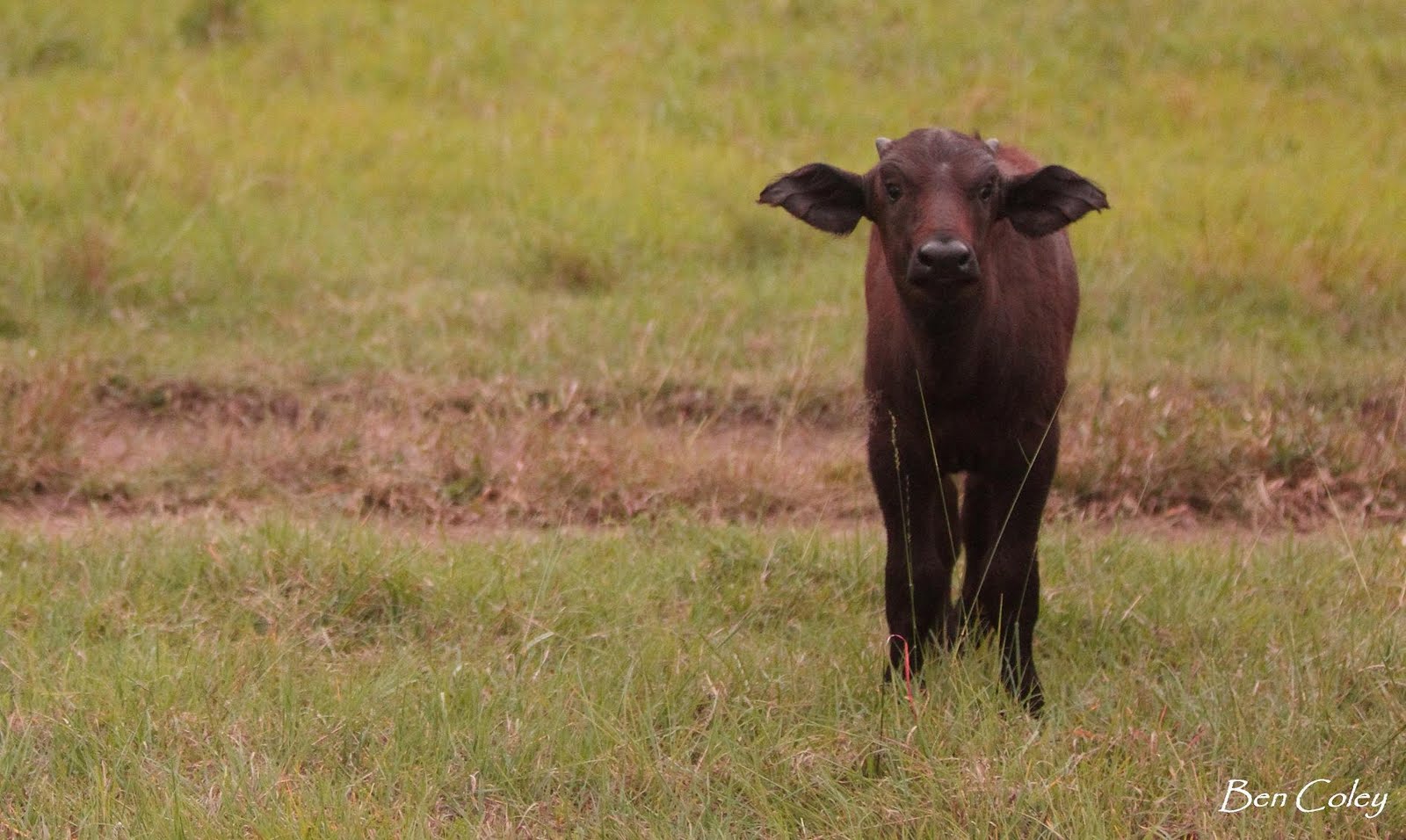
A buffalo calf momentarily separated from the 300 plus herd that flooded through Sabi Sabi last week


One of the 5 young males responsible for a female buffalo kill last week. 

        The last couple of times we saw our new generation of cubs, only 3 were seen from the initial 9.  With a survival rate of only about 10% we assumed the worse but a few days after the sighting of the boys, we were lucky enough to find not 3, but 9 cubs together again!  It looks as if another female has recently popped and restocked the numbers after the loss of the oldest 2 last month.  However, on a downside, their father was last seen many kilometers north of Sabi Sabi territory; far enough for us to assume that he will not be returning; and without his protection, these cubs’ chances of survival are almost non existent.

2 of the newest young additions to the southern pride

A rare sighting of the females from a neighbouring pride in Mala Mala.  Perhaps drawn here by the scent of the buffalo herd

        Elephant sighting continue to be good, with lots of big old bulls ambling their way through our reserve.  No doubt following the previous influx of females that we saw recently.  Many of them are still in musth (a state of heightened testosterone) and caution is advised when approaching these bush landscapers.  The late rains have continued to provide us with grey skies, making photography difficult, but just their presence is often enough to convey their power.


        Other highlights of the past week or so included a large herd of zebra frolicking around a termite mound covered in feathered chloris grass.  The light on the grass gave the whole scene a very ethereal look and I was lucky enough to catch a youngster stretching his legs! 


        An univited guest had to be captured and relocated from reception - a baboon spider had wondered through possibly looking for somewhere to relapse into a state of torpour during the winter period.  Though not a danger to us, they are quite capable of breaking the skin and inflicting a painful bite. 


April 20, 2011

The Charge of the Heavy Brigade

An elephant bull stares down the land rover at close range

     The late rains have brought with them an influx of elephants in the last week or so.  Around every corner we have witnessed great herds of these leviathans, cutting a swathe of destruction through the veld as they continue their endless march for resources.  These mammalian bulldozers once filled me with fear during my first experiences with them – their incomprehensible size and power dwarfing the landrover.  But I have grown to love these true kings of the jungle.  All animals respect the approach of an elephant – lions scatter like rats and even rhinos visibly adopt the old motto that discretion is the better part of valour!  (A month or 2 ago, a male rhino was even killed by an angry elephant bull!)  Of all the animals here, they are the most fascinating to watch but the hardest to photograph!  Always doing something interesting, many an hour can be wiled away watching the dexterity of their trunks as they feed, the tenderness of their greetings and the soft rumble of their low frequency contact calls. 

Elephant bull in all his massive glory

     Whilst the rains have made our game drives difficult due to the restrictions caused by a lack of off-roading, the animals have relished in the abundance of lush green grass.  None more so than the giant lawn mowers of the bush, the white rhino.  Feeding for up to 12 hours a day, they have been abundant as ever, enjoying this last banquet before the hardship of the arid winter months sets in.  I managed to get a couple of good pictures that I hope show their relish in these good times!

Rhino with a mouthful of lush grass

Rhino smiling at the camera

     Leopards, as ever, are always a highlight on any game drive.  No matter how many times you see them, their beauty and majesty never fades.  The recent leopard drought has abated a little due to the return of our most frequently sighted female.  My last entry included a photo of her and her one surviving cub drinking from a puddle and they have been sighted repeatedly of late.

Mother and cub on the march

     Their nemesis, ‘Xihangalas’ (the destroyer – named due to his recent incursions into our property, the murder of this females other cub, and the general reign of terror that has caused the other leopards to adopt a more illusive approach to their activities!) has also been seen regularly of late and still has the stable population running scared.  He is however, a sight to behold.  A magnificent leopard in his prime, his confidence and self belief so evident as he strides down the roads, muscles rippling under his velveteen coat, demarcating his new territory with impudence.

The new kid on the block

Xihangalas on the prowl

In other news on the reserve, we have seen the departure of almost all of the migratory birds in preparation of the approaching winter.  The veld is much quieter now than a few weeks ago, with only the recently fledged juveniles still orientating themselves before the commencement of their long journeys.  I also found out last week that I have passed my SKS birding theory exam, so I am now studying for the practical aspect of the assessment before I can be declared a fully fledged regional bird guide!   The lions have retreated to the far corner of our area due to the disappearance of the new dominant male that has sired no less than 9 cubs in recent months.  Whilst sightings of them are relatively common, I have been unable to get a good pictures as of yet.  On a slightly sour note, 2 of them have died of starvation recently but we remain optimistic of a bright future for the remaining 7.  Time will tell if the new males making forays into Sabi Sabi will find and destroy them.

Zebra feeding at sunrise